Nobody sets out to overspend on a cleanroom. But a lot of Australian businesses do — not because they're careless, but because the fixed-construction model has been the default for so long that questioning it feels unusual. You call a builder. You wait for a site survey. You get a quote that makes your eyes water. And then you start looking for ways to trim it.
Here's what the traditional process rarely tells you upfront: for many operations, you're solving a compliance problem with a construction project when a much leaner solution exists. Portable Cleanroom Solutions (Australia) has matured to the point where they aren't a compromise. For mid-sized pharma operations, electronics assemblers, aerospace MRO teams, and contract manufacturers, they're often the sharper decision — financially and operationally.
This piece is for the people doing the actual evaluation. Not a high-level overview — a detailed look at where the cost advantages actually sit, what the trade-offs are, and what to press suppliers on before you sign anything.
Portable Cleanroom Solutions (Australia): Let's Start With What 'Cheaper' Actually Means
The first thing people hear about portable cleanrooms is that they cost less than building a fixed one. That's true — but it understates the case, and it also skips over why they cost less, which matters if you're trying to defend the decision internally.
Fixed cleanroom construction in Australia carries costs that most quotes bury in the detail: structural modifications to the host building, dedicated HVAC risers, fire suppression upgrades, electrical sub-boards, and specialist clean-wall panelling. None of that is cheap. None of it is fast. And none of it comes back when you decommission the space.
A portable unit arrives as a finished, pre-validated environment. The filtration system is integral. Pressure control is built in. You're not modifying a building — you're placing a certified controlled space inside or adjacent to one. The capital outlay is lower because you're buying the solution rather than constructing it from components across five different contractors.
"The real financial argument isn't just the build cost. It's everything that doesn't appear in the cleanroom quote — the structural work, the HVAC modifications, the six months of delays before production can start."
— Operations Manager, Contract Pharmaceutical Manufacturer, Victoria
That gap between the quoted price and the true cost of fixed construction is where Portable Cleanroom Solutions (Australia) makes its strongest case. The delta is usually bigger than the initial figures suggest.
Portable Cleanroom Solutions (Australia): The Five Places Your Budget Actually Benefits
1. You stop paying for the building work before the cleanroom work
This is the most consistent hidden cost in traditional cleanroom projects. Before any controlled environment equipment goes in, the building itself usually needs work — and that work gets quoted separately, often by different contractors, and almost always runs over.
Reinforced slab. Drainage. Raised ceilings to accommodate HVAC. Pre-treatment of wall surfaces. These aren't optional. They're prerequisites. And for older industrial buildings — which is where many Australian manufacturers operate — the bill can dwarf the cleanroom fitout itself.
Portable Cleanroom Solutions (Australia) sidesteps most of that. The unit's environmental controls are self-contained. You need a hardstand or a clean floor, power, and the right footprint. That's it. The savings here aren't marginal — on some sites, they're the primary reason for choosing the portable route.
2. The compliance clock starts weeks earlier, not months
Getting to a validated operation faster isn't just satisfying — it's money. Every week, a production line sits idle waiting on construction sign-off or regulatory inspection, which is a week of lost throughput.
Fixed cleanroom projects in Australia regularly take four to nine months from approval to validated operation. That's not a worst case — it's the typical range once you account for construction, commissioning, and the TGA or ISO validation process.
Portable Cleanroom Solutions (Australia) from established manufacturers can be operational in two to six weeks. Pre-validated configurations compress that further. For contract manufacturers working to client deadlines, for pharma operations launching new product lines under regulatory scrutiny, and for defence contractors with scheduled MRO windows, that gap in timeline is a direct financial advantage.
3. Portable Cleanroom Solutions (Australia) scales to your actual demand
Fixed cleanrooms are sized at build. If your production volumes double, you need a construction project. If they halve, you're paying to condition and filter more air than you're using.
Modular portable systems don't work like that. You configure for the current need. If you win a new contract that requires more controlled space, you add a unit. If a contract ends, you scale back. For contract manufacturers, especially those who are constantly managing variable client volumes, that flexibility isn't a perk. It's a direct cost control mechanism that fixed construction simply can't match.
4. Running costs are lower than most operations budgets assume
Operational expenditure gets less attention than upfront cost in most cleanroom evaluations, but over a five-year horizon, it frequently dwarfs the build cost.
Modern portable cleanrooms are built to current energy efficiency standards — variable speed drives on HEPA systems, intelligent environmental monitoring, and insulated panel construction that reduces thermal load. Older fixed installations, particularly those built more than a decade ago, typically consume more energy per cubic metre than a current-generation portable unit of equivalent classification.
For Australian businesses dealing with energy costs that rank among the highest in the developed world, that efficiency gap matters. A 15–20% reduction in energy consumption on cleanroom HVAC across a three-year operating period is a real number worth putting in the business case.
5. Maintenance and repair are simpler — and cheaper
When something goes wrong in a fixed cleanroom — a HEPA bank fails, a pressure differential drops, a wall panel gets damaged — rectifying it inside a certified environment with active regulatory compliance requirements is not straightforward. Access is constrained. Specialist contractors are required. Downtime is expensive.
Portable Cleanroom Solutions (Australia) are engineered for access. Filtration modules, air handling components, and panel sections are designed to be replaced or serviced without decommissioning the entire space. Suppliers with Australian support operations — not just a distributor — can turn around component replacements faster. That's not just convenient. It's a meaningful reduction in unplanned downtime cost
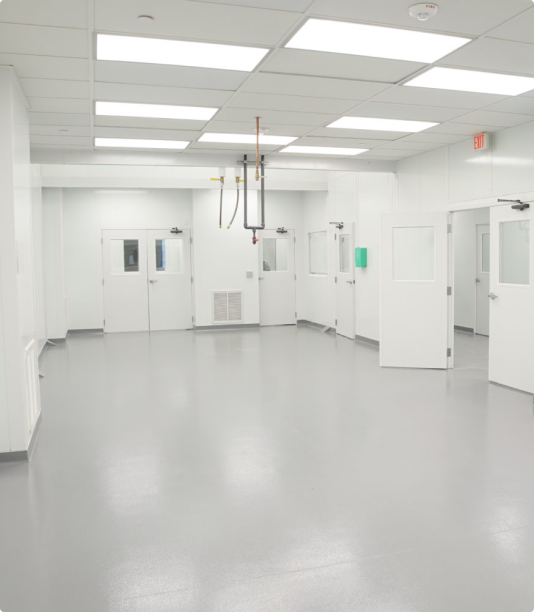
Who's Actually Using Portable Cleanroom Solutions (Australia) — and What For
The industries that have adopted portable cleanrooms most quickly in Australia share a common characteristic: they operate under strict contamination control requirements but can't always predict exactly where, or at what scale, those requirements will apply twelve months from now.
Pharmaceutical and Compounding
This sector has driven a lot of the adoption. TGA compliance isn't optional, and for smaller compounding pharmacies or clinical trial manufacturers, the cost of a fixed GMP-compliant facility was historically prohibitive. Portable units validated to ISO Class 5, 7, or 8 — with documented air change rates, pressure differentials, and particulate counts — give these operations TGA-defensible environments at a fraction of the capital cost.
They're also being used for new product line isolation during validation phases, where contaminating an existing line would be a regulatory and commercial disaster.
Electronics and Precision Manufacturing
ESD control, particulate management, and humidity regulation are non-negotiable for PCB assembly, microelectronics work, and optical component manufacturing. Portable cleanrooms configured with anti-static flooring, grounded framing, and HEPA filtration rated to IPC-A-610 and J-STD-001 requirements are in active use across Australian electronics manufacturers — many of whom couldn't justify fixed construction for what is, in some cases, a single high-value production line.
Aerospace MRO
Portable Cleanroom Solutions (Australia) has found a practical home in aerospace maintenance, repair, and overhaul operations. Component inspection and precision assembly work require FOD control and particulate management, but not necessarily a permanent facility. Being able to position a controlled environment adjacent to the work area — on a hangar floor, at a forward operating base, or at a client site — changes what's operationally possible.
Food Production High-Care Zones
Allergen-controlled packaging, sterile fill-finish for premium products, and high-care processing zones are all growing use cases. The ability to install a clean zone inside an existing food facility — without a full refurbishment that shuts production — is a genuine competitive advantage for producers expanding their range or entering export markets with tighter contamination standards.
What the Sales Literature Won't Tell You: Honest Trade-Offs
Any credible assessment has to acknowledge where fixed cleanrooms still make more sense. Portable solutions have real advantages, but they're not the right answer for every situation.
For very large controlled spaces — think 500 square metres or more in continuous operation — fixed construction often becomes more cost-effective per square metre. The economics shift at scale. Similarly, if your process requires deeply integrated building services (high-purity water loops, specialised exhaust systems, or process-specific gas distribution), a fixed installation offers greater integration flexibility.
Some highly regulated facilities also have specific regulator expectations around permanent infrastructure. While portable cleanrooms absolutely can — and do — satisfy TGA and ISO requirements, a facility that has historically operated fixed cleanrooms may face more scrutiny at the first validation inspection for a portable alternative. That's not a technical barrier; it's a change management consideration.
None of these is a reason to default back to fixed construction. There are reasons to do a proper like-for-like evaluation before committing either way.
Portable Cleanroom Solutions (Australia): Questions That Separate Good Suppliers From the Rest
The quality of portable cleanroom suppliers in Australia varies considerably. There are manufacturers building to high engineering standards with genuine local support capability — and there are distributors reselling imported units with limited ability to support validation, maintenance, or rapid repair.
These questions will help you work out which category you're dealing with:
▸ Can you provide validation documentation for this specific ISO classification, including particle count methodology, air change rate calculations, and pressure differential specifications — before installation, not after?
▸ What is your response time for a critical maintenance issue — not your standard SLA, but your actual capability to have a technician on-site in Australia?
▸ Show me an installation you've done in my sector, at a similar scale, and let me speak with the customer directly.
▸ What does the ongoing maintenance contract actually include? HEPA replacement schedules, filter integrity testing, environmental monitoring calibration — get the specifics.
▸ If I need to reconfigure or relocate this unit in two years, what does that process involve and what does it cost?
▸ Has this unit or equivalent been through a TGA inspection? If so, what was the outcome and what documentation exists?
A supplier who can't answer these clearly and specifically — not with marketing language, but with actual documentation and references — isn't ready to support a regulated manufacturing environment.
The Numbers That Matter in a Business Case for Portable Cleanroom Solutions (Australia)
If you're building a business case for switching from fixed construction to a portable alternative — or justifying a portable cleanroom as a first installation — these are the figures worth gathering:
Total cost of ownership, not build cost: Request a five-year TCO projection from each supplier. Include energy consumption, maintenance contracts, filter replacements, and any compliance testing costs. The upfront delta between fixed and portable is typically 40–65%, but the five-year TCO comparison is usually even more favourable for the portable option.
Validation timeline and production commencement date: Translate the difference in weeks-to-operation into revenue. If your operation generates $80,000 a week at full production, a 12-week faster deployment is a $960,000 revenue opportunity. That belongs in the business case.
Building modification costs: Have your facilities or engineering team price every modification the fixed option requires. It's rare for this to come in under $50,000 on a site that wasn't purpose-built for cleanroom installation. On older industrial sites, it's often multiples of that.
Flexibility premium: Quantify what it's worth to your business to be able to scale, relocate, or decommission the space without a construction project. For operations with variable contract volumes, this is a real number — even if it's expressed as risk reduction rather than a direct saving.
Portable Cleanroom Solutions (Australia): Getting to the Right Decision
The businesses that make the best decisions on cleanroom infrastructure aren't the ones who defaulted to what they'd always done, or who bought the cheapest unit they could find. They're the ones who ran a proper evaluation — fixed vs portable, supplier A vs supplier B — with numbers rather than assumptions.
Portable Cleanroom Solutions (Australia) has earned serious consideration in almost every sector that needs controlled environments. The technology has matured. The regulatory track record is established. The cost model is, for most operations, materially better.
The only mistake is letting the familiarity of fixed construction substitute for actually doing the maths.
Working Through Your Cleanroom Options in Australia?
Pod Tech are the people worth calling first.
They're an Australian-based specialist in portable and modular cleanroom solutions — and they work differently from most suppliers. The conversation doesn't start with a product catalogue. It starts with your operation: what you're manufacturing, what classification you need, what your site constraints are, and what regulatory framework you're working within.
Pod Tech's team has deep experience across pharmaceutical (TGA/GMP), electronics (IPC standards), aerospace, and food-grade applications. They design, supply, install, and support — which means one point of accountability from first consultation through to validated operation.
If you're comparing fixed construction against a portable solution and you want numbers rather than brochures, Pod Tech can help you build a proper like-for-like cost analysis. No obligation — just a cleaner starting point for a decision that's worth getting right.
https://booksstorage.com/blog/best-uses-for-portable-cleanroom-solutions--australia