
Moisture measurement is an important requirement in many industrial environments. Manufacturing facilities, gas processing plants, compressed air systems, and other technical operations often depend on maintaining suitable moisture levels to protect equipment and support consistent production quality. Even small quantities of water vapour can affect sensitive processes, making reliable monitoring an important part of industrial operations.
Portable measurement instruments provide a convenient way to check moisture conditions at different points within a system. Instead of relying only on permanently installed equipment, technicians can take readings during inspections, maintenance activities, and routine quality checks. Understanding how these instruments work, what features they offer, and where they can be used helps businesses select equipment that matches their requirements.
Why Portable Moisture Measurement Is Important
Moisture can create several challenges in industrial systems. In compressed air networks, excess water vapour may condense when temperatures fall, potentially affecting pipelines, valves, pneumatic tools, and connected machinery. In gas processing applications, unwanted moisture may also influence gas quality and create difficulties during storage or transportation.
Regular monitoring helps operators understand whether drying equipment is performing as expected. It can also reveal differences between measurement points and support investigations when unexpected moisture levels are detected. Keeping records of these readings gives maintenance teams useful information for identifying trends and planning inspections.
Portable instruments are particularly helpful when technicians need to examine several locations. Their mobility allows measurements to be taken without depending entirely on a fixed monitoring point. This flexibility makes them useful for industrial maintenance teams and quality control personnel.
Understanding Dew Point and Trace Moisture
Dew point is the temperature at which a gas becomes saturated with water vapour and condensation can begin under the relevant conditions. When the gas is cooled to this temperature, water vapour may form liquid water. A lower dew point generally indicates a lower moisture concentration when measurements are compared under consistent conditions.
Trace moisture refers to very small quantities of water vapour present in a gas. Measuring these low concentrations requires suitable sensor technology and an appropriate sampling arrangement. The instrument's measurement range, accuracy, and operating conditions influence how useful its readings will be.
Dew point values may be displayed in different engineering units, including degrees Celsius, degrees Fahrenheit, and moisture concentration units. Understanding the selected unit and the conditions under which a measurement is taken helps operators interpret results correctly.
Choosing a Handheld Dewpoint Meter
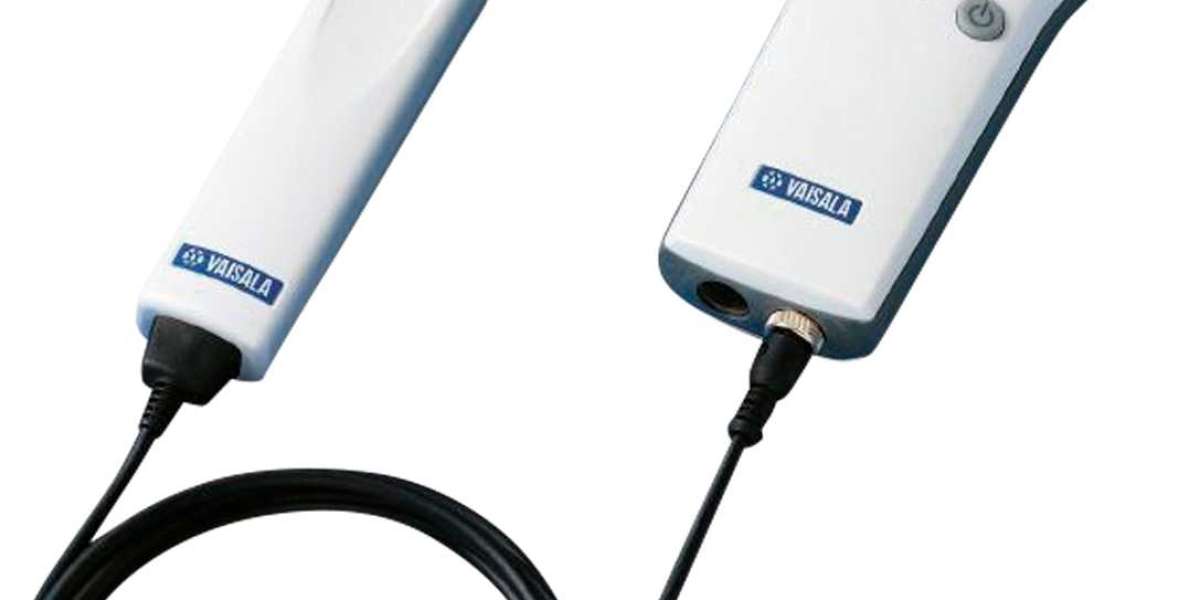
A Handheld dewpoint meter provides a practical solution for measuring moisture in gases and compressed air at different sampling locations. These instruments are designed to support spot-check measurements, making them useful for technicians who need to inspect several parts of an industrial system.
When selecting an instrument, users should consider the required measurement range, accuracy, gas compatibility, sampling conditions, and operating environment. Battery life and display readability may also be important for technicians who carry out regular inspections. Additional functions such as data logging and communication interfaces can help users record and review measurements.
The intended application should guide the final choice. Some facilities may need a straightforward portable instrument for occasional checks, while others may require advanced features for frequent measurements or work in potentially hazardous areas. Reviewing the manufacturer's specifications helps confirm whether a particular model is appropriate.
Important Features of Portable Dewpoint Instruments
Portable dewpoint instruments are available in different configurations, and their features can vary by model. Measurement range is one of the first specifications to examine. An instrument should cover the expected moisture conditions of the process and provide readings suitable for the intended application.
Sensor technology is another important consideration. The sensor determines how moisture is detected and can influence the instrument's measurement characteristics. Users should review the manufacturer's information about accuracy, response, calibration, and compatibility with the gas being measured.
Modern handheld instruments may also include digital displays, internal data logging, USB connections, or Bluetooth communication. These features can make it easier to review readings and transfer information to a computer. For applications involving hazardous locations, users must verify that the selected model has the required safety certification for the specific environment.
Shaw Moisture Meters: Exploring Handheld Measurement Equipment
Shaw Moisture Meters provides moisture measurement equipment for industrial and commercial applications. Its product range includes handheld dewpoint hygrometers, portable moisture meters, inline analysers, transmitters, and sensors. These products support different measurement requirements across compressed air and process gas applications.
The company's SDHmini range includes standard, data-logging, and intrinsically safe configurations. According to the official product information, these handheld instruments use AutoCal and desiccant dry-down technology to support trace moisture measurements in gases and compressed air. Selected models also provide USB and Bluetooth communication options for transferring information to a computer.
The SDHmini-Ex is designed for applications where an intrinsically safe handheld instrument is required. Shaw lists ATEX, IECEx, and UL certifications for this model. Users should review the exact product documentation and operating conditions before selecting equipment for a hazardous area.
Applications Across Industrial Sectors
Handheld moisture measurement instruments are useful in several industries where gas dryness needs to be checked. Compressed air systems are a common application because moisture can influence equipment performance and the condition of connected components. Technicians can take readings at selected points to evaluate drying performance and investigate possible changes.
Natural gas and specialty gas operations may also require trace moisture measurements. Monitoring can help operators assess gas conditions and investigate whether moisture levels meet the relevant process requirements. The selected instrument must be compatible with the gas and suitable for the pressure and sampling arrangement.
Other applications include power generation, chemical processing, pharmaceutical manufacturing, food packaging, and general engineering. These industries may use dry gases or controlled atmospheres during specific production activities. Portable instruments allow technicians to carry out measurements at different locations when required.
Understanding Spot Checks and Sampling Procedures
Spot checks involve taking measurements at selected points rather than relying exclusively on continuous readings from a permanently installed instrument. This approach can help maintenance teams compare conditions across a system and investigate unusual moisture readings.
A suitable sampling arrangement is important for obtaining meaningful results. Connecting hoses, fittings, and sample lines should be compatible with the gas and the expected moisture range. Leaks, contamination, or moisture retained in unsuitable materials can affect readings, particularly when measuring very low concentrations.
Technicians should follow the instrument's operating instructions and allow the measurement to stabilize as recommended. Recording the sampling location, date, operating conditions, and measurement units can make results easier to compare during later inspections.
Calibration and Maintenance for Reliable Measurements
Calibration is an important part of maintaining confidence in moisture readings. Instruments should be checked according to the manufacturer's recommendations and the requirements of the application. Calibration documentation can help users understand measurement performance and maintain records for quality procedures.
Routine maintenance may include inspecting sampling connections, checking hoses and fittings, reviewing instrument condition, and monitoring changes in readings. Users should follow the manufacturer's instructions when cleaning, storing, or servicing the equipment.
Portable instruments should also be protected during transportation and storage. Avoiding unsuitable environmental conditions and handling the equipment carefully can help preserve its condition. If readings become inconsistent, technicians should review the sampling arrangement, calibration status, and instrument condition before making decisions about the process.
Selecting the Right Instrument for Your Requirements
The most suitable handheld instrument depends on the measurement task. Facilities that perform occasional inspections may prefer a straightforward model, while teams that regularly collect measurements may benefit from data logging and communication functions.
Users should also consider the operating environment. If an instrument will be used in a potentially hazardous location, its certification and permitted conditions must be checked carefully. Portability alone does not make a device suitable for every industrial environment.
Other selection factors include measurement range, accuracy, gas compatibility, battery operation, calibration support, and ease of use. Comparing these specifications can help businesses identify equipment that meets their actual requirements without paying for unnecessary features.
Conclusion
A handheld dewpoint meter is a useful instrument for monitoring moisture conditions in industrial gases and compressed air systems. Its portable design allows technicians to carry out spot checks at different locations, assess drying performance, and investigate changes in process conditions.
Choosing suitable equipment requires attention to measurement range, accuracy, sensor technology, sampling arrangements, and operating environment. Regular calibration, proper maintenance, and careful handling also support dependable measurements. By reviewing technical specifications and understanding their application requirements, businesses can select portable moisture measurement equipment that supports reliable operations and effective process monitoring.