
A hand laser welding machine is a modern industrial welding solution designed to join metal components with accuracy, speed, and consistency. It uses a concentrated laser beam to create strong welds while maintaining better control over the welding area. Its handheld design allows operators to work on different metal surfaces, shapes, and product sizes with greater flexibility.
As manufacturing industries continue to adopt advanced production technologies, handheld laser welding equipment is becoming an important choice for businesses looking to improve their welding processes and production quality.
What Is a Hand Laser Welding Machine?
A hand laser welding machine is a portable welding system that uses laser energy to join two or more metal parts. Unlike conventional welding methods, which rely on an electric arc or other heat sources, laser welding delivers concentrated energy directly to the workpiece.
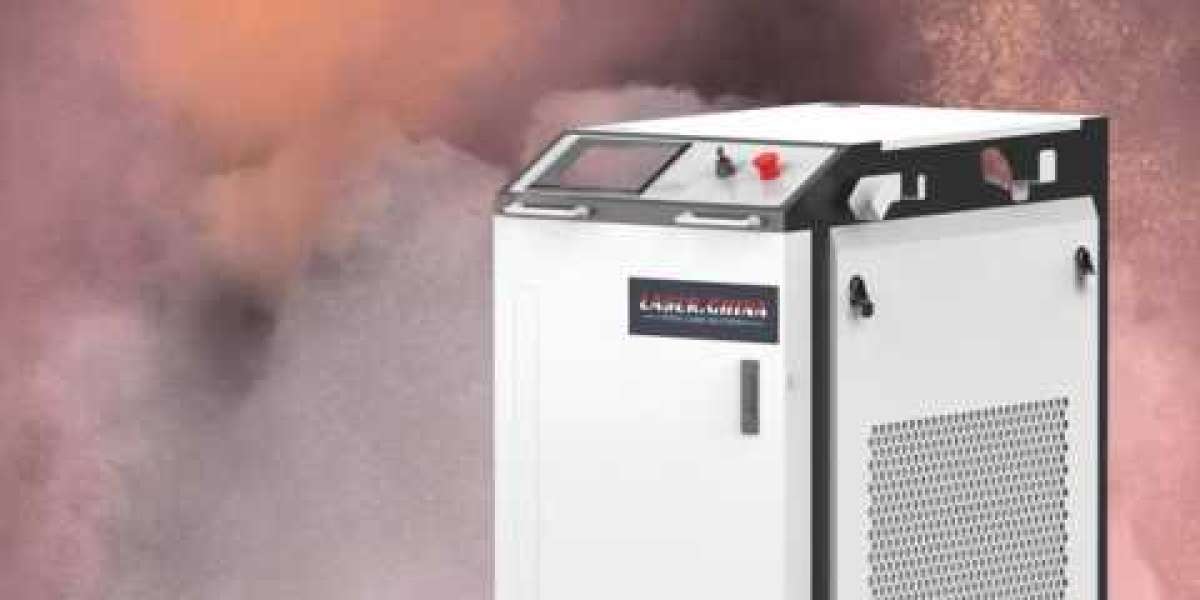
The equipment generally consists of a laser source, handheld welding gun, control system, cooling unit, and wire feeder when additional filler material is required. The operator guides the welding gun along the joint to create a controlled and uniform weld.
These machines are commonly available with different power options, including 1,000W, 1,500W, 2,000W, and 3,000W configurations. The appropriate power level depends on material thickness, production requirements, and the type of welding application.
How Does Handheld Laser Welding Work?
The working process begins when the laser source generates a high-energy beam. This beam travels through a fiber delivery cable to the handheld welding gun, where it is directed toward the metal joint.
When the laser beam reaches the material, it generates concentrated heat that melts the metal edges. As the operator moves the welding gun along the joint, the melted material cools and solidifies, forming a strong connection.
Depending on the application, operators can adjust parameters such as laser power, welding speed, beam width, and feeding speed. Proper settings help achieve consistent welding results while controlling heat input and minimizing unwanted material deformation.
Materials Suitable for Laser Welding
A hand laser welding machine can work with several commonly used industrial metals. Its suitability depends on the laser power, material thickness, surface condition, and welding configuration.
Common materials include:
Stainless Steel: Used in kitchen equipment, industrial containers, and architectural products.
Carbon Steel: Suitable for machinery parts, metal structures, and fabrication work.
Aluminum: Used in automotive components, enclosures, and lightweight structures.
Galvanized Steel: Applied in sheet metal fabrication and various industrial products.
Copper: Used in electrical components and specialized manufacturing applications.
Before starting production, material compatibility and welding parameters should be tested to ensure reliable results.
Industrial Applications of Handheld Laser Welding
Handheld laser welding technology serves a wide range of manufacturing industries. Its flexible operation makes it suitable for both small workshops and larger production facilities.
In automotive manufacturing, it is used for joining metal panels, brackets, frames, and selected vehicle components. Metal fabrication businesses use it to produce cabinets, equipment housings, stainless steel furniture, and structural parts.
The equipment is also useful in kitchenware manufacturing, where clean weld seams are important for producing stainless steel sinks, countertops, and commercial kitchen equipment.
In addition, machinery manufacturers, electronics producers, and metalworking workshops can incorporate handheld laser welding into their production processes for suitable metal joining applications.
How to Choose the Right Machine
Selecting suitable equipment requires understanding your production needs. Laser power should be considered according to the thickness and type of material you regularly process. Businesses working with thin stainless steel sheets may require different specifications from manufacturers joining thicker metal components.
The laser source is another important consideration. A reliable laser source, stable control system, and effective cooling arrangement contribute to consistent machine operation.
Buyers should also evaluate the welding gun design, available welding modes, wire-feeding compatibility, maintenance requirements, and technical support offered by the manufacturer.
Operator training and workplace safety arrangements are equally important. Appropriate laser safety enclosures, protective equipment, and controlled working areas should be used according to the machine's safety requirements.
Maintenance and Operating Considerations
Regular maintenance helps maintain welding quality and extend equipment service life. Operators should inspect the protective lens, welding nozzle, fiber cable, and cooling system according to the manufacturer's maintenance schedule.
Keeping the machine clean and checking its electrical connections can help prevent unnecessary operational interruptions. The protective lens should be replaced whenever inspection indicates contamination or damage.
It is also important to follow recommended operating parameters rather than using excessive laser power. Proper training ensures that operators understand machine settings, material preparation, and safe handling procedures.
Final Thoughts
A hand laser welding machine offers modern manufacturers a practical way to improve metal joining processes with controlled laser energy and flexible handheld operation. From automotive components and stainless steel products to general metal fabrication, this technology supports a wide range of industrial applications.