
Cough, a blocked nose, and excess mucus can make daily life uncomfortable. These symptoms may affect sleep, work, and everyday activities. Allergies can also cause sneezing, a runny nose, throat irritation, and sinus pressure. Understanding the cause of these symptoms can help you choose the right approach to relief.
Solvin-OD Tablet SR contains the active ingredients levocetirizine and pseudoephedrine. This combination helps manage allergy symptoms and nasal congestion. It may help when mucus drainage and throat irritation occur alongside nasal allergies. However, it does not directly suppress a cough or break down mucus in the chest. BuyRxSafe encourages readers to understand a medicine’s purpose and consult a healthcare professional before using it.
What Is Solvin-OD Tablet SR?
Solvin-OD Tablet SR is a combination medicine used to relieve symptoms associated with allergic rhinitis, including sneezing, a runny nose, and nasal congestion. Its two active ingredients work in different ways to reduce allergy symptoms and help clear a blocked nose.
Allergic rhinitis can occur when the body reacts to triggers such as pollen, dust, or other airborne particles. The reaction can cause nasal swelling, itching, sneezing, and increased mucus production. When these symptoms continue, they may affect breathing comfort and sleep.
A healthcare professional can determine whether this medicine is suitable for your symptoms and medical history.
How Does Solvin-OD Tablet SR Work?
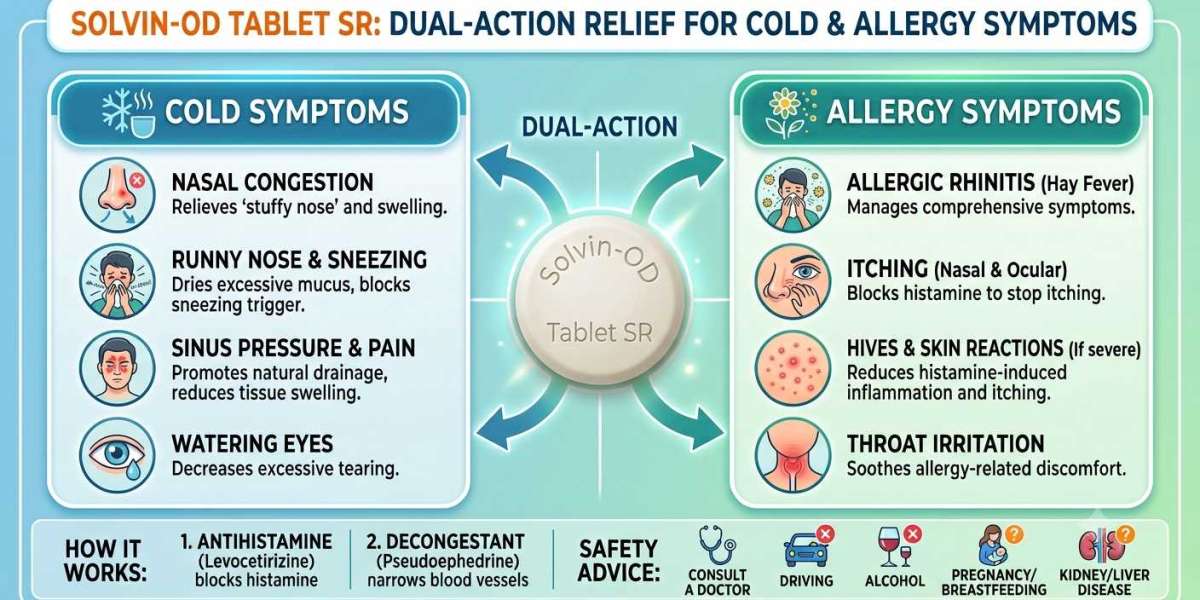
Solvin-OD Tablet SR combines an antihistamine with a decongestant. Each ingredient has a different role in relieving nasal allergy symptoms.
Role of Levocetirizine
Levocetirizine is an antihistamine that blocks the effects of histamine, a substance released during an allergic reaction. Histamine can cause sneezing, itching, a runny nose, and watery eyes.
By reducing these effects, levocetirizine helps control allergy-related symptoms. This may also reduce the discomfort caused by ongoing nasal irritation.
Role of Pseudoephedrine
Pseudoephedrine is a decongestant that reduces swelling in the nasal passages. Allergies can make the tissues inside the nose swell, which restricts airflow and creates a blocked-nose feeling.
Pseudoephedrine helps reduce this swelling, making nasal breathing more comfortable. It may also help relieve pressure associated with nasal congestion.
Together, these ingredients target allergy symptoms and nasal blockage. They do not directly treat every possible cause of cough or mucus production.
Solvin-OD Tablet SR Uses for Cough and Mucus Relief
The main purpose of Solvin-OD Tablet SR is to relieve allergy symptoms and nasal congestion. Its potential benefits depend on the cause of your symptoms.
1. Relief From a Runny Nose
Allergies can cause the nose to produce excess watery mucus. This may lead to frequent nose blowing, irritation, and discomfort throughout the day.
By reducing the effects of histamine, levocetirizine can help control an allergy-related runny nose. This benefit is most relevant when allergies cause the symptoms.
2. Relief From Nasal Congestion
A blocked nose can make breathing difficult, especially at night. Pseudoephedrine helps reduce swelling in the nasal passages, which may improve airflow.
When nasal congestion improves, some people also experience less pressure around the nose and face.
3. Support for Allergy-Related Throat Irritation
Mucus from the nose can sometimes run down the back of the throat. This process, known as postnasal drip, may cause throat irritation, frequent throat clearing, or a cough.
When allergies contribute to nasal symptoms, reducing congestion and allergic reactions may help ease some of the discomfort associated with postnasal drip. However, the medicine does not directly treat all causes of throat irritation or coughing.
4. Relief From Sneezing and Watery Eyes
Allergies often cause repeated sneezing, itchy eyes, and watery discharge. Levocetirizine helps control these symptoms by blocking histamine activity.
Reducing these symptoms may make everyday activities more comfortable, particularly during periods when common allergens trigger reactions.
5. Does It Remove Mucus From the Chest?
Solvin-OD Tablet SR is not a mucus-thinning medicine. It does not directly loosen thick mucus in the lungs or treat every type of chesty cough.
A cough with thick mucus may have a different cause from an allergy-related runny nose. Speak with a healthcare professional to identify the cause and choose suitable treatment rather than relying on this medicine for all cough symptoms.
Common Causes of Cough and Excess Mucus
Several conditions can cause coughing, mucus production, and throat irritation. Common causes include:
- Allergies: Exposure to pollen, dust, or other triggers may cause sneezing, nasal discharge, and postnasal drip.
- Respiratory infections: Viral illnesses may cause a sore throat, coughing, and mucus production.
- Sinus inflammation: Swelling in the nasal passages and sinuses can affect mucus drainage.
- Air pollution and irritants: Smoke, dust, and strong fumes may irritate the airways.
- Other respiratory conditions: Persistent coughs may require medical assessment to identify the underlying cause.
The correct treatment depends on the cause, the severity of symptoms, and your overall health.
How to Take Solvin-OD Tablet SR Safely
Follow your healthcare professional’s instructions for the dose and duration of treatment. Swallow the sustained-release tablet whole with water. Do not crush, chew, or break it, because doing so may affect how the medicine releases its ingredients.
Do not take more than the prescribed amount or use it for longer than recommended. Tell your healthcare professional about any other medicines or supplements you take to help prevent unwanted interactions.
Simple steps, such as drinking enough water, avoiding known allergy triggers, and keeping indoor air free from smoke, may also help improve comfort.
Possible Side Effects
Solvin-OD Tablet SR can cause side effects. Commonly reported effects include:
- Dry mouth
- Headache
- Nausea or vomiting
- Tiredness
- Drowsiness or dizziness
- Restlessness or difficulty sleeping
Avoid driving or operating machinery if you feel sleepy or dizzy. Avoid alcohol because it may worsen drowsiness.
Seek medical advice if side effects persist or become troublesome. Get urgent medical help for chest pain, a severe or unusual headache, a rapid or irregular heartbeat, or difficulty breathing.
Who Should Consult a Doctor Before Use?
Speak with a healthcare professional before taking Solvin-OD Tablet SR if you have high blood pressure, heart disease, glaucoma, thyroid problems, diabetes, kidney problems, or difficulty passing urine. Also discuss pregnancy or breastfeeding before using it.
Tell your doctor if you take other prescription or non-prescription medicines, especially products that may interact with decongestants. Do not give this medicine to a child unless a qualified healthcare professional confirms that it is appropriate.
When Should You Seek Medical Advice?
Consult a healthcare professional if your cough continues, worsens, or interferes with sleep and daily activities. Seek prompt assessment if you have a high or persistent fever, wheezing, chest pain, or thick or bloody mucus.
Get urgent medical care if you experience severe breathing difficulty or blue or grey lips. These symptoms may indicate a serious problem and should not be managed with allergy treatment alone.
Solvin-OD Tablet SR Uses: Final Thoughts
Solvin-OD Tablet SR helps relieve allergy symptoms such as sneezing, a runny nose, and nasal congestion. Its ingredients, levocetirizine and pseudoephedrine, work together to reduce allergic reactions and nasal swelling. It may help ease some throat irritation when nasal allergies contribute to postnasal drip, but it does not directly suppress a cough or loosen chest mucus.
People in the UK and Australia should also seek advice from an appropriately qualified healthcare professional before using this medicine, as product availability and prescribing guidance may differ by location.
BuyRxSafe supports informed medicine use by encouraging readers to understand treatment benefits, precautions, and possible side effects. Always seek professional advice to identify the cause of your symptoms and choose appropriate care.