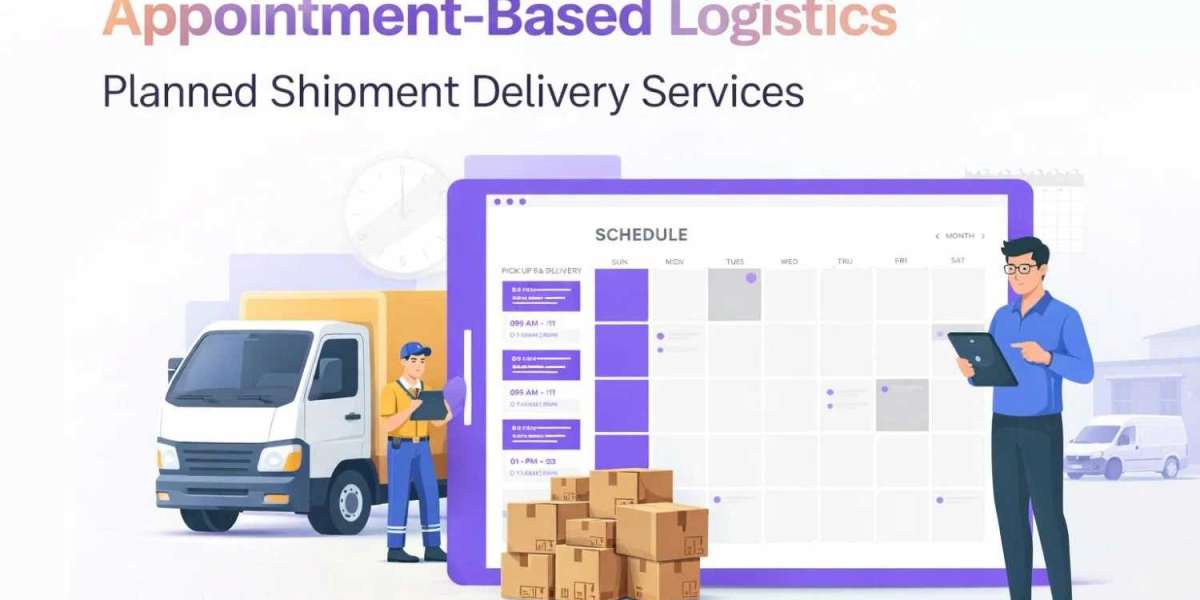

Late deliveries are rarely caused by trucks alone. More often, they happen because warehouses are not ready to receive cargo, unloading docks are occupied, paperwork is incomplete, or communication between multiple stakeholders breaks down. This is exactly where appointment-based logistics services make a measurable difference.
Instead of allowing shipments to arrive whenever they can, businesses assign predefined delivery windows that coordinate transporters, warehouse teams, inventory systems, and receiving staff. The outcome isn't simply better punctuality. It creates a smoother supply chain where fewer resources are wasted waiting for the next step to begin.
As supply chains become more interconnected across manufacturers, distributors, retailers, and e-commerce businesses, appointment-driven delivery models are becoming less of a convenience and more of an operational requirement.
Industry Reality: Why Delivery Timing Has Become More Important Than Delivery Speed
For years, logistics discussions focused almost entirely on transit time. Everyone wanted faster transportation, shorter delivery routes, and lower freight costs.
That mindset is changing.
Many businesses now realize that arriving early can be almost as disruptive as arriving late.
Imagine a warehouse with only four unloading bays. If six trucks reach the facility at the same time, two vehicles immediately begin waiting. The drivers lose productive hours, warehouse workers become overloaded, inventory updates are delayed, and the transport company absorbs additional operating costs.
I've seen situations where trucks completed a 900-kilometre journey on schedule but still spent five to six hours waiting outside a warehouse because there was no coordinated receiving process. The transportation itself wasn't the problem. The scheduling process was.
This operational bottleneck is becoming increasingly common as shipment volumes continue to rise.
That is why many organizations are moving toward structured logistics appointment scheduling services rather than relying solely on estimated arrival times.
Why Appointment-Based Logistics Services Matter More as Businesses Grow
A company handling ten deliveries a week can often solve scheduling issues with phone calls and spreadsheets.
Scale changes everything.
When hundreds of shipments move simultaneously between factories, warehouses, regional hubs, and retail stores, manual coordination quickly becomes unreliable. Every delayed vehicle affects warehouse planning, labour allocation, inventory availability, and customer commitments.
One thing many operations teams underestimate is how small scheduling gaps multiply across an entire supply chain.
A warehouse delay of forty minutes rarely stays a forty-minute delay.
It can postpone outbound dispatches, disrupt vehicle availability for the next shipment, increase detention costs, and affect production schedules at another location.
In reality, implementation is often easier than maintaining scheduling discipline every single day.
Businesses that perform well over the long term usually develop standardized appointment processes instead of depending on individual coordinators to resolve conflicts manually.
Understanding Appointment-Based Logistics Services Beyond the Definition
Most articles explain appointment-based logistics services as simply booking delivery slots.
That definition misses the bigger picture.
The actual purpose is synchronizing multiple operations that normally function independently.
A scheduled delivery window allows transport providers, warehouse supervisors, inventory planners, security personnel, receiving teams, and customers to prepare before the vehicle even arrives.
The result isn't just improved punctuality.
It creates predictable operational flow.
This becomes particularly valuable for industries where unloading delays immediately affect production or inventory replenishment.
Retail distribution centres, automotive suppliers, pharmaceutical warehouses, FMCG manufacturers, and e-commerce fulfillment centres all depend on timing rather than transportation alone.
I've worked with facilities where trucks arrived continuously throughout the day without appointments. Every morning looked manageable until the afternoon rush began. Suddenly dozens of vehicles were queued outside the gate while warehouse staff struggled to prioritize unloading.
Interestingly, nothing had changed about transportation.
Only the absence of scheduling created the congestion.
Where Traditional Delivery Models Usually Begin to Break Down
Many logistics operations continue operating with "deliver whenever the truck arrives" planning.
That approach often works while shipment volumes remain low.
Problems emerge when businesses expand geographically.
More suppliers.
More customers.
More warehouses.
More transportation partners.
Eventually, the lack of scheduling becomes visible.
Drivers begin waiting longer.
Warehouse labour becomes inconsistent.
Inventory updates slow down.
Receiving teams experience unnecessary overtime.
Customer delivery commitments become increasingly difficult to maintain.
This is where planned shipment delivery services create operational stability.
Rather than responding to congestion after it occurs, businesses proactively distribute deliveries across available receiving capacity.
The improvement is usually gradual rather than dramatic.
However, after several months, organizations often notice measurable reductions in detention charges, improved labour utilization, fewer delivery conflicts, and better inventory accuracy.
Appointment Scheduling Is About Coordination, Not Control
One misconception is that appointment scheduling reduces flexibility.
The opposite is generally true.
Well-managed scheduling systems create flexibility because everyone involved understands when resources will be available.
Warehouse managers can assign labour based on confirmed arrivals.
Transport companies can optimize vehicle utilization.
Inventory teams receive predictable inbound stock.
Customers gain greater confidence in delivery commitments.
This level of coordination becomes especially valuable during seasonal demand spikes.
During festivals or year-end inventory cycles, facilities handling scheduled deliveries generally recover from unexpected disruptions much faster than operations relying entirely on manual coordination.
The technical software itself rarely solves these problems.
Consistent operational discipline does.
How Scheduled Logistics Delivery Solutions Improve Daily Operations
Not every business requires complex automation.
However, every growing logistics operation benefits from greater visibility.
Effective scheduled logistics delivery solutions create a structured workflow that minimizes uncertainty across the supply chain.
Instead of multiple departments making independent decisions, transportation schedules become part of a coordinated operational plan.
Over time, businesses typically notice improvements in several areas:
- Better warehouse dock utilization without long vehicle queues.
- Lower detention and waiting costs for transporters.
- Improved inventory planning because inbound deliveries become predictable.
- Faster unloading and reduced turnaround time.
- More accurate communication between logistics providers, warehouse teams, and customers.
These improvements rarely appear overnight. They develop through consistent scheduling practices, clear communication, and operational accountability rather than technology alone.
Decision-Making Guide: Is Your Business Ready for Appointment-Based Logistics Services?
If several of the following situations sound familiar, your operation is likely reaching the point where appointment-based scheduling delivers measurable value:
- Trucks frequently wait outside warehouses for available unloading bays.
- Delivery delays disrupt production schedules or customer commitments.
- Multiple teams rely on manual phone calls and spreadsheets to coordinate inbound freight.
- Seasonal demand creates recurring warehouse congestion.
- You need greater visibility into inbound shipments across multiple locations.
Businesses experiencing these challenges often benefit more from improving scheduling discipline than from simply adding more trucks or warehouse capacity.
Choosing the Right Logistics Appointment Scheduling Services Provider
Selecting a provider for logistics appointment scheduling services is rarely just a technology decision. It is an operational one. Many businesses invest in scheduling software expecting immediate improvements, only to discover that their internal processes were never clearly defined in the first place.
A capable logistics partner should understand how transportation, warehousing, inventory management, and customer commitments interact. Appointment scheduling only works when every stakeholder follows the same process. If warehouse teams frequently override delivery slots or transporters ignore scheduled arrival times, even the best platform will struggle to produce results.
When evaluating providers, ask practical questions rather than focusing only on software features. How are delivery conflicts resolved? Can appointments be rescheduled quickly? Does the provider support multiple warehouse locations? How are delays communicated to customers? These operational details usually determine whether a scheduling system succeeds or becomes another underused tool.
Businesses looking for reliable appointment-based shipment services should also evaluate reporting capabilities. Historical data on missed appointments, average unloading times, detention hours, and dock utilization often reveals operational issues that would otherwise remain hidden.
Technology Helps, But Operational Discipline Delivers Results
Technology has changed logistics considerably over the past few years, but it has not eliminated operational challenges. Instead, it has made those challenges easier to identify.
Modern appointment scheduling platforms typically integrate with Warehouse Management Systems (WMS), Transport Management Systems (TMS), GPS tracking, and Enterprise Resource Planning (ERP) software. This allows every stakeholder to work from the same information instead of relying on phone calls, emails, or spreadsheets.
For example, if a vehicle encounters unexpected highway congestion, the estimated arrival time can be updated automatically. Warehouse managers receive advance notice and adjust dock schedules before the truck reaches the facility. That small operational adjustment prevents unnecessary waiting and keeps unloading activities organized.
Honestly speaking, technology only performs well when businesses are willing to standardize their internal workflows. I've seen organizations purchase advanced scheduling software while still allowing manual booking through WhatsApp messages and phone calls. Predictably, the system became inconsistent within weeks.
The software wasn't the problem. The process was.
Common Mistakes Businesses Make During Implementation
Implementation is usually where expectations meet reality.
Many organizations assume that appointment scheduling automatically eliminates delays. In reality, it simply creates the structure needed to manage them more effectively.
One common mistake is launching the system without training warehouse staff, transport coordinators, and logistics partners together. Every participant follows slightly different procedures, leading to confusion during the first few weeks.
Another issue is setting unrealistic appointment windows. Businesses sometimes schedule deliveries every 30 minutes without considering unloading capacity, documentation checks, or product inspection requirements. Before long, delays begin cascading through the day's schedule.
Communication also deserves attention. If transporters are not informed promptly about appointment changes, missed delivery windows become inevitable.
This is where most businesses struggle.
They invest heavily in technology but underestimate the operational discipline required to keep schedules accurate every day.
The companies that succeed usually begin with a pilot location, refine the workflow, gather performance data, and expand gradually rather than attempting organization-wide implementation immediately.
The Business Impact Extends Beyond Faster Deliveries
The real advantage of appointment-based logistics services is not simply reducing waiting time. It improves how different parts of the supply chain work together.
Warehouses can forecast labour requirements more accurately. Drivers spend less time waiting outside facilities. Inventory becomes available sooner because receiving activities happen according to plan. Procurement teams gain greater confidence in inbound deliveries, while customers receive more reliable delivery commitments.
These improvements create measurable operational benefits over time.
Businesses often notice lower detention charges, better warehouse productivity, improved asset utilization, and stronger customer satisfaction without significantly increasing transportation resources.
That is why many large retailers, manufacturers, healthcare companies, and e-commerce businesses have shifted toward appointment-driven logistics rather than continuing with open delivery models.
What 2026 Is Likely to Bring for Appointment-Based Logistics
The logistics industry is moving toward greater visibility, automation, and predictive planning. Appointment scheduling will increasingly become part of larger digital supply chain platforms rather than operating as a standalone process.
Artificial intelligence is already being used to recommend delivery slots based on warehouse capacity, historical unloading times, traffic conditions, and shipment priority. Instead of assigning appointments manually, systems can suggest schedules that maximize dock utilization while reducing congestion.
Another noticeable trend is the expansion of control towers that monitor transportation across multiple warehouses and regions from a single dashboard. This allows logistics managers to identify disruptions early and reallocate resources before they affect customer deliveries.
Sustainability is also becoming part of scheduling decisions. Fewer waiting vehicles mean lower fuel consumption, reduced emissions, and better vehicle utilization. As environmental reporting becomes more important, efficient scheduling will contribute not only to operational performance but also to corporate sustainability goals.
Businesses that continue relying entirely on manual scheduling may find themselves struggling to meet future customer expectations as supply chains become more connected and data-driven.
Conclusion
Appointment scheduling is often viewed as an administrative task, but experienced logistics professionals know it is much more than that. It is one of the simplest ways to improve coordination across transportation, warehousing, inventory, and customer service without making major infrastructure investments.
The mistake many organizations continue making is trying to solve warehouse congestion by adding more labour or increasing transportation capacity. In many cases, the underlying issue is simply poor coordination between arriving shipments and available receiving resources.
Looking ahead, appointment-based logistics services will become a standard operational practice rather than a competitive advantage. Businesses that establish disciplined scheduling processes today will be better prepared to manage larger shipment volumes, changing customer expectations, and increasingly complex supply chains tomorrow.
Frequently Asked Questions
1. What are appointment-based logistics services?
Ans. Appointment-based logistics services allow deliveries and pickups to be scheduled within predefined time slots. This helps warehouses, transporters, and customers coordinate operations more efficiently while reducing delays and congestion.
2. Which industries benefit the most from logistics appointment scheduling services?
Ans. Manufacturing, retail, e-commerce, pharmaceuticals, FMCG, automotive, and distribution businesses benefit the most because they handle frequent inbound and outbound shipments that require accurate warehouse planning.
3. How do scheduled logistics delivery solutions reduce operational costs?
Ans. By minimizing truck waiting time, improving dock utilization, reducing detention charges, and helping warehouse teams plan labour more effectively, scheduled logistics delivery solutions improve efficiency across the supply chain.
4. What should businesses look for in reliable appointment-based shipment services?
Ans. Look for providers with strong operational experience, real-time tracking, flexible scheduling, reporting capabilities, system integrations, and proven expertise in coordinating transportation with warehouse operations.
5. Can small and medium-sized businesses benefit from appointment-based logistics services?
Ans. Yes. Even businesses with moderate shipment volumes can improve warehouse productivity and customer satisfaction by implementing structured delivery schedules before operational complexity increases.






