
The Indian luxury jewelry landscape is undergoing a profound transformation. Once rooted primarily in traditional investment, the sector is rapidly evolving into a dynamic fusion of heritage craftsmanship, modern design, and global aspiration. As the nation witnesses rising urban affluence and a burgeoning affluent consumer base, the luxury jewelry market is positioned for exceptional growth.
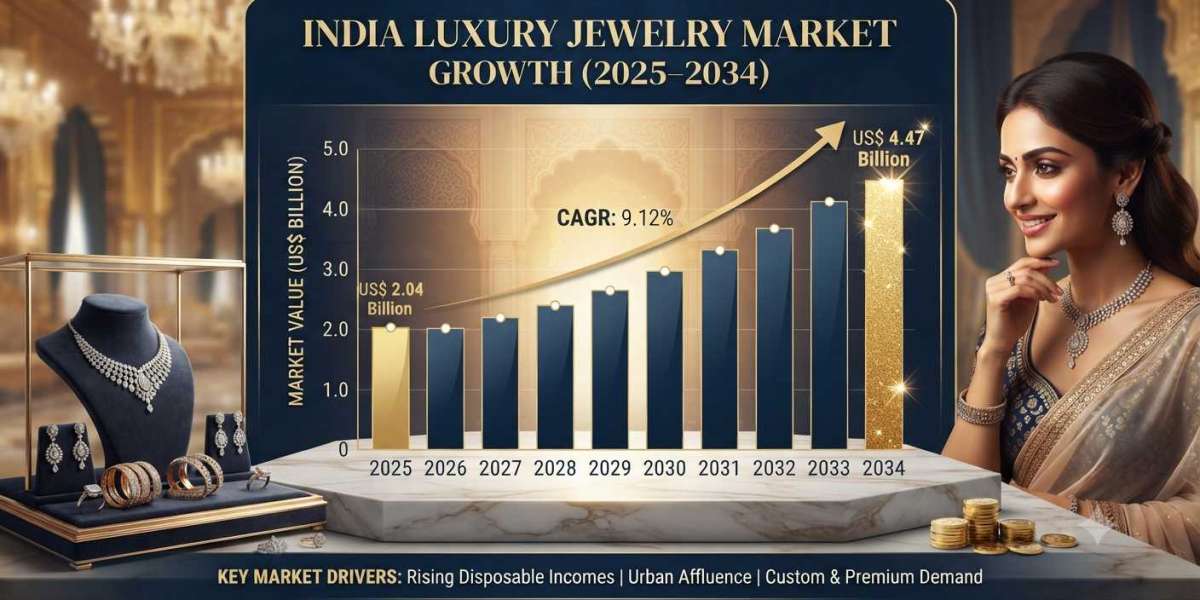
According to Renub Research, the India luxury jewelry market is projected to reach US$ 4.47 billion by 2034, expanding from US$ 2.04 billion in 2025. This growth is expected to occur at a robust CAGR of 9.12% during the forecast period of 2026–2034.
Market Dynamics: The Drivers of Elegance
The surge in demand is propelled by a confluence of economic and social factors. As per capita disposable income continues its upward trajectory—projected to rise from US$ 2.54 thousand in 2023 to US$ 4.34 thousand by 2029—more consumers are shifting their focus toward premium and custom-designed pieces.
Download Free Sample Report: https://www.renub.com/request-sample-page.php?gturl=india-luxury-jewelry-market-p.php
The Shift to Organized Retail and Certification
A significant driver is the consumer’s transition from unorganized local jewelers to established, organized retail chains. Modern buyers prioritize transparency, purity, and ethical sourcing. The demand for hallmark-certified products has surged, as consumers seek assurance in their high-value purchases. This trend is further bolstered by the entry of global luxury brands and the opening of sophisticated domestic boutiques, such as the recent launch of BLING in Delhi, which emphasizes the fusion of sustainability, lab-grown diamonds, and refined craftsmanship.
Cultural Continuity and Modernization
While India's deep-seated wedding culture and festival-driven consumption (Diwali, Akshaya Tritiya, etc.) remain the primary anchors for the industry, the nature of the purchase is changing. Today’s consumer, particularly the younger demographic, seeks to amalgamate heritage with a contemporary aesthetic. Whether it is a modern bride opting for a bespoke diamond set or a professional investing in a minimalist gold piece for daily wear, the market is successfully balancing traditional sentiment with modern lifestyle needs.
Segment Analysis: Where Innovation Meets Luxury
The Indian luxury market is segmented by raw materials, products, and end-users, reflecting the diverse preferences of the populace.
Gold Jewelry: Remains the backbone of the industry, symbolizing wealth and legacy. Innovations in temple motifs and lightweight luxury sets have kept this segment highly relevant.
Diamond Jewelry: Experiencing rapid growth, particularly for engagements and anniversaries. The focus here is on the "4Cs" (Cut, Color, Clarity, Carat) and global design influences.
Pearl Jewelry: Increasingly popular for its understated sophistication, especially among fashion-forward demographics seeking versatility for formal occasions.
Product Segments: Necklaces and bracelets continue to lead, driven by their prominence in bridal ensembles and as preferred gifting items for milestones.
Strategic Challenges
Despite the optimistic forecast, the market faces hurdles:
Economic Sensitivity: Given the high price of precious metals and gems, fluctuations in global rates or economic uncertainty can lead to deferred purchases.
Affordable Alternatives: The rise of minimalist, fast-fashion jewelry and lab-grown alternatives presents a challenge. To compete, traditional luxury brands must intensify their focus on exclusive storytelling, craftsmanship, and brand heritage.
Regional Growth Hubs
States like Maharashtra, Andhra Pradesh, and Uttar Pradesh remain at the forefront of this growth. Mumbai and Pune drive the market through a high concentration of HNWIs (High Net Worth Individuals) and a vibrant fashion scene, while states like Uttar Pradesh are seeing an explosion in premium retail infrastructure across cities like Lucknow and Noida.
Competitive Landscape
The market is characterized by a blend of iconic international players and high-end Indian designers. Key companies tracked in the Renub Research analysis include:
Global Leaders: Guccio Gucci S.p.A., The Swatch Group Ltd, Compagnie Financière Richemont SA, TCO., GRAFF, LOUIS VUITTON, Chopard, and MIKIMOTO.
Retail Giants: Signet Jewelers and Pandora.
These organizations are maintaining their market position through continuous design innovation, expansive retail footprints, and aggressive digital integration.
Frequently Asked Questions (FAQs)
1. What is the projected market size of the India luxury jewelry market by 2034 according to Renub Research? The market is projected to reach US$ 4.47 billion by 2034, growing from US$ 2.04 billion in 2025.
2. What is the expected CAGR for the India luxury jewelry market between 2026 and 2034? The market is expected to expand at a CAGR of 9.12% during this forecast period.
3. Which factors are primarily driving the growth of this market? Key drivers include rising disposable incomes, increasing urban affluence, a transition toward organized/branded retail, and a growing consumer preference for certified, hallmark-quality products.
4. How is the wedding culture in India influencing the luxury jewelry segment? Weddings remain the primary engine for the luxury jewelry market, with families prioritizing high-end gold, diamonds, and precious stones for bridal sets, which are viewed as both essential cultural items and long-term investments.
5. Why is the offline retail segment still dominant in India’s luxury jewelry market? Despite the growth of digital platforms, the offline segment remains dominant because luxury jewelry is a high-involvement purchase. Consumers prefer visiting showrooms to verify purity, experience craftsmanship firsthand, and receive personalized consultations.
6. How is the competitive landscape changing with the influence of younger consumers? Younger consumers are driving demand for modern, minimalist, and customized designs. This has forced luxury brands to innovate in aesthetics and marketing to differentiate themselves from affordable fast-fashion alternatives.
7. Which states are identified as key growth regions for luxury jewelry in India? Major growth centers include Maharashtra, Tamil Nadu, Karnataka, Gujarat, Uttar Pradesh, West Bengal, Rajasthan, Telangana, Andhra Pradesh, and Madhya Pradesh.