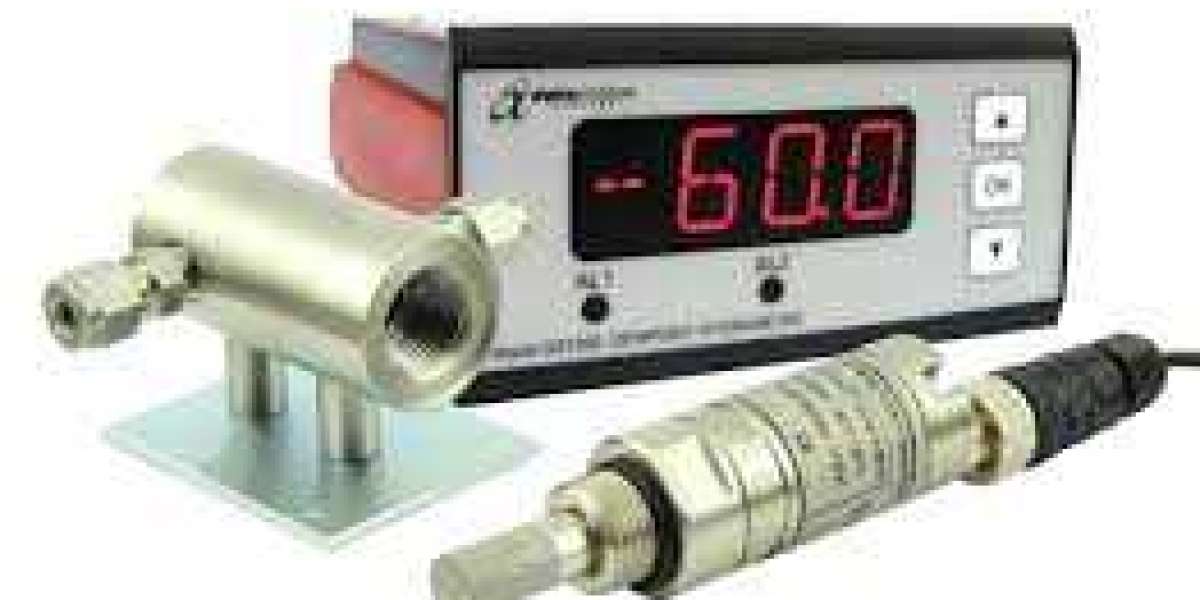

In manufacturing facilities, processing plants, food production environments, pharmaceutical cleanrooms, and countless other industrial settings, compressed air is one of the most essential utilities in daily operation. Often described as the fourth utility alongside electricity, gas, and water, compressed air powers pneumatic tools and actuators, conveys products through pipelines, purges and pressurizes sensitive equipment, and provides the breathing air that workers in hazardous environments depend on. But compressed air carries a hidden threat that is frequently underestimated until it causes real damage — moisture. Understanding and controlling compressed air dewpoint is one of the most important responsibilities of any compressed air system manager, and Shawmeters provides the instrumentation and expertise to do it with precision and confidence.
Why Moisture in Compressed Air Is a Serious Problem
To understand the importance of compressed air dewpoint measurement, it is necessary to appreciate what happens to moisture during the compression process. Atmospheric air always contains water vapor — the amount varies with ambient conditions, but it is always present. When this air is compressed, its volume decreases dramatically but the total amount of water vapor it contains remains the same. The result is that compressed air is proportionally far more moisture-laden than the atmospheric air from which it was produced.
As this moisture-rich compressed air cools — in aftercoolers, distribution pipework, and downstream equipment — water vapor condenses into liquid water that travels through the system causing damage wherever it goes. Liquid water in compressed air lines causes corrosion of pipework and fittings, contamination of pneumatic tools and actuators, damage to sensitive process equipment, and in food, beverage, and pharmaceutical applications, direct contamination of products. In systems operating in environments where temperatures fall below freezing, condensed moisture freezes in valves, regulators, and pipework — causing blockages and failures that can shut down entire production lines.
Monitoring compressed air dewpoint gives system operators the information they need to verify that their drying equipment is performing correctly and that the air reaching their processes and equipment meets the moisture specification it is required to meet. Shawmeters has made compressed air dewpoint measurement one of its core specializations, developing instruments that deliver the accuracy and reliability this critical monitoring task demands.
Compressed Air Dewpoint Standards and Quality Classes
The international standard ISO 8573 defines compressed air quality classes that specify maximum permitted moisture levels — expressed as pressure dewpoint — for different applications. Understanding these quality classes is essential context for any discussion of compressed air dewpoint measurement and the instruments used to monitor it.
The standard defines moisture quality classes ranging from Class 1, which permits a maximum pressure dewpoint of −70°C and represents the driest air required for the most sensitive applications, through to Class 6, which permits a pressure dewpoint of up to +10°C and is appropriate for applications where moisture control requirements are relatively relaxed. Most industrial compressed air applications fall within Classes 2 through 4, with pressure dewpoints between −40°C and +3°C representing the typical target range for general manufacturing, instrumentation, and process applications.
Shawmeters compressed air dewpoint instruments are designed and calibrated to measure accurately across the full range of ISO 8573 quality classes, giving system operators confidence that their measurements are meaningful and that their air quality assessments are reliable. The company's deep familiarity with compressed air quality standards means that Shawmeters can advise clients not just on instrument selection but on the appropriate quality class targets for their specific applications.
How Shawmeters Measures Compressed Air Dewpoint
Shawmeters offers compressed air dewpoint measurement solutions based on several sensing technologies, each optimized for different segments of the compressed air measurement challenge.
Capacitive Polymer Sensors for General Industrial Applications — For the majority of compressed air dewpoint monitoring applications — those targeting ISO 8573 Classes 3 through 6 with pressure dewpoints in the range of −20°C to +20°C — capacitive polymer sensors offer an excellent combination of measurement performance, fast response, and cost-effective instrumentation. Shawmeters capacitive dewpoint transmitters for compressed air applications are engineered with particular attention to the contamination resistance challenges that compressed air environments present — oil aerosols, compressor lubricants, and particulate contamination all being potential threats to sensor performance in poorly maintained systems.
Aluminum Oxide Sensors for Dryer Performance Monitoring — Where compressed air dewpoints extend into the −40°C to −70°C range — typical of heatless desiccant dryers and refrigerant dryers with supplementary desiccant polishing — aluminum oxide sensing technology offers the measurement capability needed. Shawmeters aluminum oxide compressed air dewpoint instruments are calibrated to deliver accurate measurement at these demanding low dewpoint levels, providing the data needed to verify dryer performance and detect regeneration failures before they impact air quality.
Chilled Mirror Reference Instruments — For calibration verification, dryer performance validation, and applications where the highest possible measurement accuracy is required, Shawmeters chilled mirror instruments provide reference-grade compressed air dewpoint measurement. These instruments are frequently used alongside installed transmitters to verify their ongoing accuracy and provide the traceable measurement data required for quality management system audits.
Monitoring Points and System Architecture
Effective compressed air dewpoint monitoring requires careful thought about where in the system measurements should be made and how the resulting data should be used. Shawmeters works with clients to design measurement system architectures that provide the right information at the right points in the compressed air distribution network.
Measurement at the dryer outlet is the most fundamental monitoring point — providing direct verification that the drying equipment is performing to specification. A rising dewpoint at this point is the earliest indicator of dryer performance degradation, allowing maintenance intervention before air quality deteriorates to the point of causing downstream problems. Shawmeters instruments installed at dryer outlets provide continuous real-time monitoring with alarm outputs that alert operators immediately when dewpoint rises above a defined threshold.
Point-of-use monitoring at critical applications provides an additional layer of assurance — verifying that air quality at the point where it actually matters meets the required specification regardless of what may be happening elsewhere in the distribution system. Distribution pipework can introduce moisture through leaks, condensation in dead legs, or contamination from poorly maintained components, and point-of-use monitoring catches problems that dryer outlet monitoring alone would miss.
Sample Conditioning for Compressed Air Dewpoint Measurement
Measuring compressed air dewpoint accurately requires more than simply connecting a sensor to the compressed air line. The sample reaching the sensor must be delivered at the correct pressure, the correct flow rate, and free from liquid water, oil contamination, and particulate matter that could damage the sensor or compromise measurement accuracy.
Shawmeters designs and supplies complete sample conditioning systems for compressed air dewpoint applications — including pressure regulators, coalescing filters, flow controllers, and bypass arrangements that allow sensor maintenance without interrupting air supply. These sample conditioning systems are an integral part of the measurement solution, ensuring that Shawmeters instruments receive the clean, properly conditioned sample they need to deliver reliable compressed air dewpoint measurements throughout their operational life.
The Value of Reliable Compressed Air Dewpoint Data
The business case for investing in quality compressed air dewpoint instrumentation from Shawmeters is straightforward and compelling. Reliable dewpoint data enables proactive maintenance of drying equipment before failures occur, preventing the production disruptions and equipment damage that moisture contamination causes. It provides the documented evidence of air quality compliance that regulated industries require. It identifies opportunities to optimize dryer operation — reducing energy consumption without compromising air quality. And it gives system managers the confidence that the compressed air their facility depends on is consistently meeting the quality standard their processes and equipment require.
For every facility that takes compressed air quality seriously, Shawmeters provides the compressed air dewpoint measurement capability to back that commitment with reliable, accurate, and traceable data.