Recovering after surgery or a minor medical procedure requires proper wound care, patience, and attention to your healthcare provider’s instructions. While the initial procedure may be over, follow-up care remains essential for supporting healing, reducing the risk of complications, and helping the affected area recover comfortably. For many patients, arranging transportation, managing discomfort, and finding time for another clinic visit can make the recovery process more challenging. This is where Suture Removal at Home in Dubai can offer a convenient alternative for eligible patients in Dubai.
Home-based suture removal allows patients to receive appropriate follow-up care in a familiar environment, provided the service is available and the wound is suitable for treatment outside a clinical setting. A qualified healthcare professional can assess the healing incision, determine whether the stitches are ready to be removed, and perform the procedure using appropriate infection-control practices. This approach can be particularly helpful for individuals recovering from surgery, older adults, people with limited mobility, and patients who prefer to minimize unnecessary travel.
However, convenience should never replace clinical judgment. The timing of suture removal depends on the location of the wound, the type of procedure performed, the condition of the surrounding skin, and the patient's individual healing progress. Removing stitches too early may cause the wound to reopen, while leaving them in for too long can contribute to irritation or visible stitch marks.
Dubai offers a variety of healthcare providers and clinics that patients can explore when arranging postoperative care. Understanding their services, evaluating professional qualifications, and following medical advice can help patients make informed decisions about their recovery.
How Home-Based Suture Removal Supports a More Comfortable Recovery
The recovery period can be physically demanding, particularly after procedures that affect mobility or require patients to limit certain activities. Having a healthcare professional visit the home may reduce the practical difficulties associated with follow-up appointments.
Convenience Without Unnecessary Travel
Travelling to a clinic after surgery may involve traffic, waiting times, parking difficulties, and physical discomfort. For patients recovering from abdominal surgery, orthopedic procedures, or other interventions that restrict movement, these challenges can be especially inconvenient.
Home visits can simplify the follow-up process by bringing suitable care directly to the patient. Instead of organizing transportation and adjusting daily schedules, patients can arrange an appointment at home, subject to provider availability and clinical suitability.
A Familiar Environment for Postoperative Care
Some patients feel more relaxed receiving routine follow-up care in their own homes. A familiar environment may help reduce appointment-related stress and allow patients to prepare questions about wound healing, dressing changes, and activity restrictions.
A professional assessment also provides an opportunity to identify concerns that may require further medical attention. Redness, swelling, unusual discharge, or separation of the wound edges should be evaluated rather than treated as routine healing symptoms.
Individualized Attention to Wound Healing
Suture removal is not simply a matter of cutting and pulling out stitches. The healthcare professional should first examine the incision and confirm that the wound has healed sufficiently.
During a home visit, the professional can review the appearance of the incision, check for signs of infection, and explain appropriate aftercare. If the wound is not ready for removal or requires additional assessment, the appointment may need to be postponed or redirected to a suitable medical facility.
Better Coordination of Aftercare
Follow-up care often involves more than removing stitches. Patients may need guidance about keeping the area clean, protecting fragile skin, managing dressings, and gradually returning to normal activities.
A properly conducted appointment can help patients understand the next stage of recovery and recognize symptoms that warrant medical review. This guidance can be especially valuable for people recovering without a family member or caregiver who has experience with postoperative care.
Healthcare Clinics to Consider for Suture Removal and Recovery Support
Choosing a provider involves considering the availability of home visits, professional credentials, clinical assessment procedures, and the level of follow-up support offered. The following healthcare providers are options to investigate when exploring postoperative care in Dubai and elsewhere. Patients should confirm the specific service, location, and appointment arrangements directly with each provider.
Tajmeels Clinic
Tajmeels Clinic is a name patients may encounter when exploring aesthetic and cosmetic healthcare services. Individuals recovering from cosmetic procedures may need follow-up assessments to monitor incision healing and determine when sutures can safely be removed.
When contacting the clinic, patients should ask whether postoperative wound assessments and suture removal are available for their particular procedure. It is also worth confirming whether appointments take place at the clinic or whether an appropriate home-visit service can be arranged.
Patients should provide details about the procedure, the date of surgery, the location of the incision, and any current symptoms. This information helps the healthcare team determine the appropriate next step and whether an in-person clinical assessment is necessary before removal.
Enfield Royal Clinic
Enfield Royal Clinic is an option patients can investigate when researching aesthetic and cosmetic healthcare services in Dubai. For individuals recovering from a procedure involving stitches, the priority should be access to appropriate postoperative assessment and clear guidance on wound care.
Patients considering Suture Removal at Home through Enfield Royal Clinic should confirm whether home visits are available for their particular needs, which healthcare professional would perform the procedure, and whether an initial wound assessment is required.
It is important to establish whether the incision is suitable for routine removal or whether it requires additional medical attention. Patients should also ask about appointment availability, aftercare instructions, and the process for obtaining further assessment if the wound appears irritated or begins to separate.
A careful discussion before booking can help patients understand the service, avoid premature stitch removal, and make arrangements that suit their recovery requirements.
Ittihad Medical Center
Ittihad Medical Center is another healthcare provider patients may consider when researching medical services and postoperative support. Before arranging a follow-up appointment, patients should verify whether the center provides suture removal and whether its clinicians can assess wounds associated with the procedure they underwent.
The nature of the incision matters when selecting a provider. A small, uncomplicated surgical wound may require a different approach from a larger incision, a wound under tension, or an area that shows signs of infection.
Patients should ask about the clinical assessment process, the qualifications of the healthcare professional performing the removal, and any follow-up arrangements available if the wound needs additional care. If home-based appointments are important, confirming this service directly is essential rather than assuming that every medical center offers it.
IMH Hospital
IMH Hospital may be worth investigating for patients seeking hospital-based medical assessment or postoperative care. Hospital services can be particularly relevant when the incision requires a more detailed examination or when a patient has concerns about delayed healing.
Before arranging an appointment, patients should confirm the hospital's current services, the appropriate department for suture removal, and whether the original surgeon's instructions or medical records are needed.
A healthcare professional should review the wound before removing the stitches, particularly when the procedure involved deeper tissue, when healing has been slower than expected, or when the patient has experienced complications.
Patients who prefer treatment at home should specifically ask whether an appropriate home-care service is available or whether the hospital recommends an in-person visit.
myipsa.com
myipsa.com is a resource patients may wish to investigate when researching information related to healthcare services and postoperative recovery. Before relying on a website to arrange treatment, it is important to establish the identity of the provider, the nature of its services, and the qualifications of the professionals involved.
Patients should confirm whether the website directly provides clinical services, connects patients with healthcare professionals, or primarily offers information. They should also verify whether suture removal is available in Dubai and whether the service includes home visits.
When selecting any provider, patients should prioritize medical oversight, appropriate infection-control measures, clear appointment arrangements, and access to additional assessment when necessary. These considerations are more important than convenience alone.
How to Choose the Right Clinic for Suture Removal at Home
Selecting a suitable provider can make postoperative follow-up easier while helping patients protect the healing incision. The decision should be based on clinical suitability, professional qualifications, safety practices, and the type of support available after the procedure.
Experience and Professional Qualifications
Suture removal should be performed by a suitably qualified healthcare professional who understands wound healing, infection prevention, and postoperative complications.
Before booking, ask who will conduct the appointment and whether the professional has experience managing the type of wound involved. A patient recovering from cosmetic surgery may have different follow-up requirements from someone whose stitches were placed after an injury or a minor surgical procedure.
The original surgeon's recommendations should guide the timing and method of removal whenever possible.
Appropriate Techniques and Medical Equipment
The procedure generally involves examining the wound, cleaning the surrounding area as appropriate, and using suitable sterile or appropriately prepared instruments to remove the stitches.
The healthcare professional should also determine whether the wound requires additional support after removal. In some cases, adhesive wound-closure strips may be recommended to reduce tension on the healing skin.
Patients should not attempt to remove stitches themselves when the wound is not fully healed, when the removal instructions are unclear, or when complications are suspected.
Infection-Control and Safety Standards
A home appointment should maintain appropriate clinical hygiene. This includes suitable hand hygiene, appropriate instruments, proper handling of wound materials, and safe disposal of used equipment.
Patients should ask how the provider maintains infection-control standards during home visits. The professional should also assess the wound for signs of infection before proceeding.
Increasing redness, warmth, swelling, worsening pain, pus, fever, or wound separation can indicate a problem requiring medical evaluation rather than routine removal.
Consultation and Assessment Process
A reliable provider should ask about the procedure, the date the stitches were placed, the wound location, current symptoms, and any instructions given by the treating surgeon.
The assessment should establish whether the stitches are ready to be removed. If the wound is not sufficiently healed, delaying removal or arranging further medical evaluation may be safer.
Patients should feel comfortable asking questions about the procedure, expected discomfort, possible complications, and the aftercare plan.
Patient Experience and Accessibility
Convenience is an important consideration, especially for patients who have difficulty travelling. However, accessibility should be balanced with clinical suitability.
Before confirming a home visit, ask about appointment availability, service coverage in your area of Dubai, any additional home-visit charges, and the process for obtaining help if concerns arise after removal.
Clear communication and realistic expectations can help make the appointment more comfortable and reduce uncertainty during recovery.
Expected Healing and Aftercare
Removing stitches does not mean that the skin has regained its full strength. The newly healed area may remain fragile, and patients may need to protect it from friction, stretching, and excessive pressure.
A healthcare professional can explain whether dressings or adhesive strips are appropriate and when normal activities can be resumed. Patients should follow their individual postoperative instructions rather than relying on a general timeline.
The appearance of the scar will depend on several factors, including the original injury, the location of the incision, skin characteristics, wound tension, and the healing process. No provider can guarantee a particular cosmetic result.
What Happens During a Home Suture Removal Appointment?
Understanding the process can help patients feel more prepared and know what to expect.
Reviewing the Medical History
The healthcare professional may ask when the procedure took place, what type of stitches were used, and whether the patient has experienced pain, bleeding, redness, or discharge.
If available, discharge instructions or details from the original surgeon can help guide the assessment.
Examining the Incision
Before removing any stitches, the professional examines the incision to determine whether the wound edges have joined adequately and whether there are signs of infection or delayed healing.
If the wound appears unstable, the professional may recommend postponing removal or arranging further medical care.
Removing the Stitches
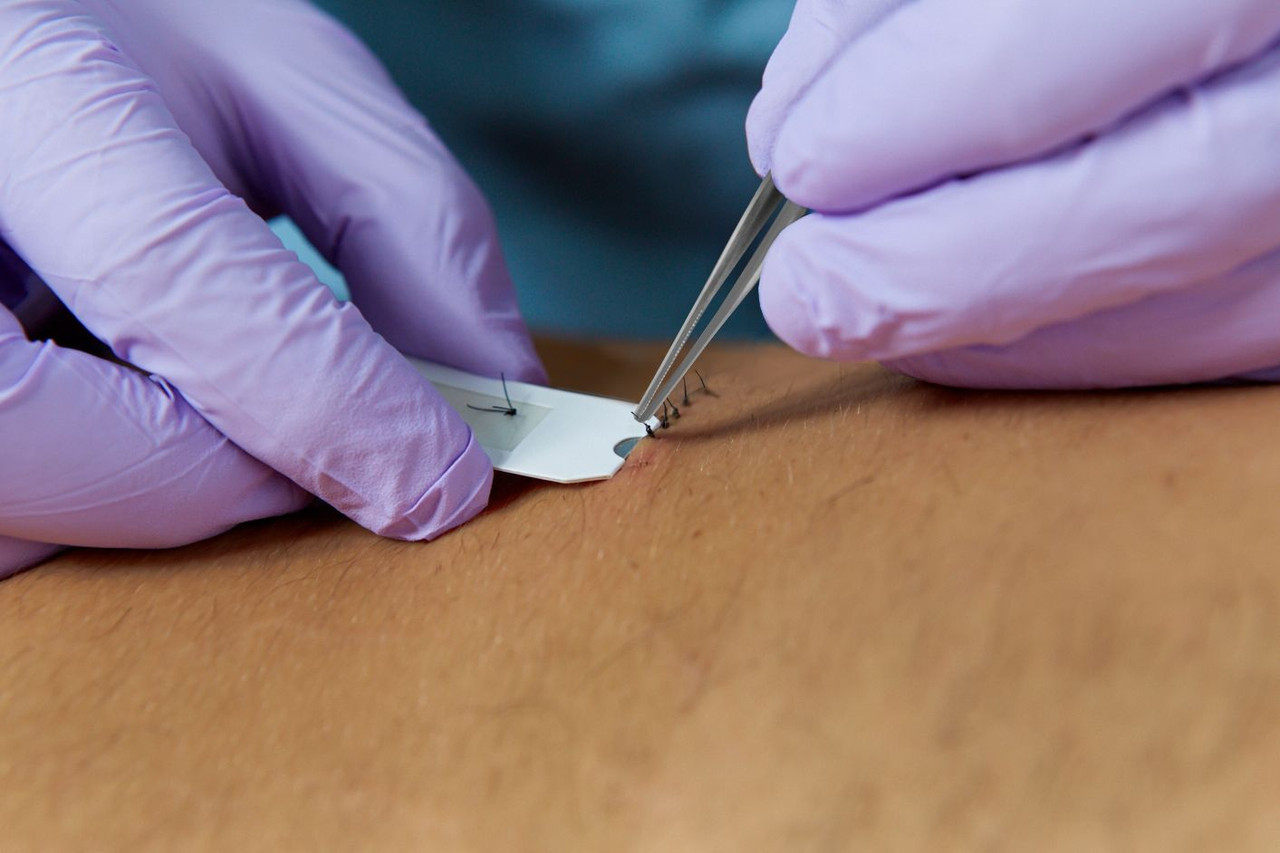
When the wound is ready, the professional uses appropriate instruments and a suitable technique to remove the sutures. Some patients experience mild pulling or brief discomfort, although the sensation varies according to the location and condition of the wound.
If the incision begins to separate or unexpected bleeding occurs, the professional should assess the situation and determine the appropriate response.
Receiving Aftercare Instructions
Following removal, the patient may receive guidance on cleaning the area, protecting the skin, and recognizing signs of complications. Adhesive strips may be recommended when additional support is appropriate.
Patients should continue to follow restrictions provided by their original surgeon, particularly after major surgery or procedures involving deeper tissues.
Who May Benefit from Home-Based Suture Removal?
Home-based care may be suitable for patients with uncomplicated wounds who have been advised that their stitches are ready to come out. It can be especially useful for individuals who find travelling uncomfortable or difficult.
People who may appreciate this arrangement include:
Patients recovering from minor surgical procedures.
Individuals who have limited mobility during recovery.
Older adults who require assistance with transportation.
Patients recovering from certain cosmetic procedures.
Individuals who prefer follow-up care in a familiar environment.
However, home removal is not appropriate for every wound. Deep or complex surgical incisions, wounds that are not healing properly, and wounds with possible infection may require assessment in a clinic or hospital.
Patients should contact their treating clinician if they are unsure whether their wound is suitable for a home appointment.
When Should You Avoid Routine Suture Removal?
Although home visits can be convenient, certain symptoms require medical assessment before any attempt is made to remove stitches.
Contact a healthcare professional if you notice increasing pain, spreading redness, unusual warmth, swelling, discharge, or delayed healing. A wound that has started to open also needs prompt assessment.
Seek urgent medical attention if you develop significant bleeding that does not stop with gentle, continuous pressure, rapidly spreading redness, severe or worsening pain, or fever accompanied by concerning wound symptoms.
Do not remove stitches simply because the expected removal date has arrived. The wound's actual condition and the original clinician's recommendations should determine whether removal can proceed.
Frequently Asked Questions
Is Suture Removal at Home safe in Dubai?
It can be appropriate for selected patients when a suitably qualified healthcare professional performs the procedure after assessing the wound. Safety depends on the condition of the incision, the type of sutures, infection-control practices, and whether additional medical evaluation is needed. Patients should confirm the provider's qualifications and home-visit arrangements before booking.
How long after surgery should stitches be removed?
The timing varies according to the location of the wound, the type of procedure, the patient's healing progress, and the surgeon's instructions. Facial stitches are often removed earlier than stitches on areas under greater tension, such as the back or joints. The treating clinician should provide the appropriate timeline for each individual wound.
Does removing stitches at home hurt?
Most routine suture removals cause little discomfort, although some patients experience mild pulling, pinching, or brief stinging. Discomfort can vary depending on the location of the incision and the condition of the surrounding skin. Patients should tell the healthcare professional if they experience unexpected or significant pain during the procedure.
Can I shower after my stitches have been removed?
In many cases, gentle showering is possible after suture removal, but the appropriate timing depends on the wound and any instructions provided by the healthcare professional. Avoid scrubbing the area, soaking it for prolonged periods, or applying unapproved products. Follow the aftercare instructions given during the appointment, especially if adhesive strips or a dressing have been applied.
What should I do if my wound opens after stitch removal?
If the wound edges separate, protect the area with a clean dressing and contact a healthcare professional promptly. Avoid pulling the skin together yourself or applying household adhesives. If the wound opens significantly, bleeding is substantial, or deeper tissue is visible, seek urgent medical care. Early assessment helps determine whether additional wound closure or other treatment is necessary.
Conclusion
Recovery after surgery involves more than allowing the body time to heal. Appropriate follow-up care, timely stitch removal, careful wound monitoring, and clear aftercare instructions all contribute to a safer recovery process. For eligible patients, Suture Removal at Home can reduce the inconvenience of travelling to a medical facility and provide an opportunity to receive professional guidance in a familiar setting.
When exploring healthcare providers in Dubai, patients should evaluate clinical qualifications, infection-control procedures, wound assessment practices, and the availability of follow-up support. Enfield Royal Clinic, Tajmeels Clinic, Ittihad Medical Center, IMH Hospital, and myipsa.com are options to investigate, but their current services, professional arrangements, and home-visit availability should be confirmed directly before booking.
Ultimately, the best approach is one that combines convenience with appropriate medical supervision. Follow the original surgeon's recommendations, avoid removing stitches prematurely, and seek professional assessment if the wound shows signs of infection or separation. With suitable planning and attentive aftercare, patients can approach this stage of recovery with greater confidence and peace of mind.